When the Movie House Became a Destination
When the movie house became a destination, cinema design turned a screening into an outing, with entrances, foyers and neighbourhood streets shaping the visit.
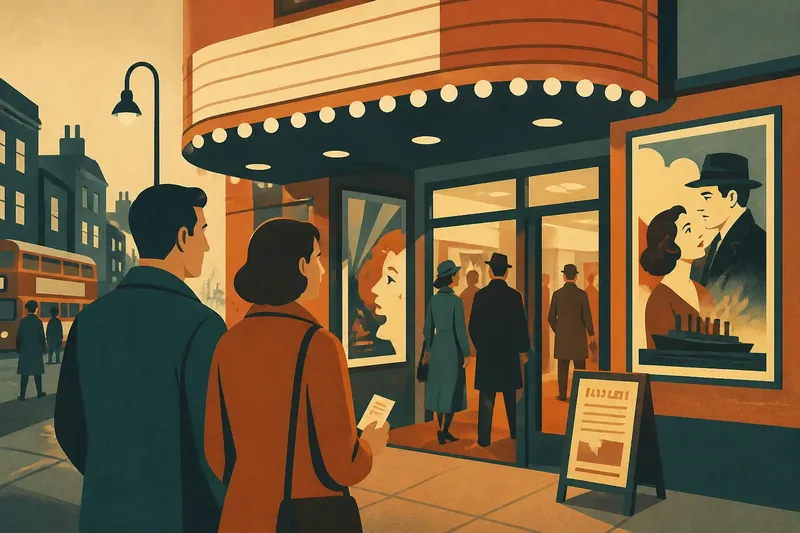
At the end of a Saturday afternoon, a couple might meet beneath a cinema’s sign, buy tickets and look over the posters before choosing where to eat afterwards. The film is still ahead of them, but the evening has already begun. The history of the movie house as a destination is also the history of those ordinary moments around a screening.
There was no single route from travelling film shows to permanent cinemas. In Britain, early screenings appeared in varied settings, including music halls and fairground entertainments; some businesses later converted existing premises for film exhibition. The surviving buildings and records show different local paths, rather than one uniform progression. What changed over time was not simply the screen, but how venues organised an audience’s arrival and stay.
Movie house destinations
A cinema becomes an outing when the journey and the time around the film form part of the pleasure. The venue offers a recognisable place to arrive, pause and gather. A visit might also fit around meeting someone, eating nearby or walking through a busy district.
Early film screenings could take place within venues already used for other entertainments. A programme might combine moving pictures with live acts, or a proprietor might adapt a room for screenings. Such examples show that film exhibition did not begin only in purpose-built cinemas. They also caution against treating every early show as the same kind of event.
Dedicated picture houses made the cinema visit easier to recognise. A street-facing entrance, ticket counter and auditorium gave it a clear shape. Crossing from pavement to foyer marked a transition from ordinary street life to a place arranged for watching together.
“Destination” need not mean a grand building or a rare celebration. A neighbourhood picture house could be part of someone’s regular routine. Its significance might lie in offering a familiar place to meet and spend an evening without elaborate plans.
Street-facing design
Many cinema façades announced their purpose with signs, posters or a marquee. These features helped make the entrance visible from the street, though their form varied with the building and its setting. Even a modest frontage could tell a passer-by that a film was showing inside.
The foyer formed a space between street and screen. Audiences could queue, read posters, find companions or buy refreshments. Its practical role mattered, but so did the pause it allowed: visitors could arrive and settle into the evening rather than move straight from pavement to seat.
Auditoriums shaped expectations in different ways. Curtains, decorative surfaces, balconies and lighting could distinguish the room from a public hall. Not every cinema used these features, and not every audience encountered the same kind of interior. The shared point was that the screen sat within a space arranged for collective viewing.
There was no single architectural recipe. A city-centre cinema and a neighbourhood venue faced different circumstances. Some emphasised spectacle; others made convenience and familiarity part of their appeal. Their common feature was a place organised around an audience’s arrival and stay.
Streets and routines
Cinemas often formed part of districts already used for leisure and errands. A visit might begin with a walk past shops, cafés or transport stops. The cinema drew on the activity around it, while its audience could add to the street’s evening life.
A central venue might be easy to combine with other plans. A local cinema might instead offer a familiar stop close to home. In either setting, the route helped shape the visit: people could plan around the place as well as the film title.
Showtimes gave an evening a rhythm. Companions needed to arrive in time, and a shared start gave them a reason to meet beforehand. Some programmes included an interval, offering a pause for conversation or refreshments. These patterns made a screening part of an evening with a beginning and middle.
Say you finish work near a high street and a friend suggests a screening. You agree to meet by the station, check the foyer posters while you wait, then have tea nearby before going in. The film remains the centre of the plan, but the route and meeting point make the cinema a destination for that evening.
Changing cinema visits
As cinemas attracted audiences, operators had to organise entry, waiting and movement through the building. Ticketing, seating and routes from the street to the auditorium all shaped the visit. The venue needed to make its layout understandable to people arriving together.
Competition for leisure time gave cinemas reasons to make a visit distinctive. Some relied on decorative interiors and a sense of occasion. Others depended on convenient locations, regular programmes or a welcoming neighbourhood presence. The appeal was not always luxury; it could be the ease of choosing a familiar place for an evening out.
Different kinds of venue offered different experiences. A picture palace made the building part of the spectacle. A local cinema could centre on proximity and routine. Later multiplexes brought several screens together, giving visitors a choice of films at one site. These forms differed, but each organised the visit around more than a single image on a screen.
Changes in transport, retail and leisure also affected where people went. As shopping and entertainment shifted between town centres and out-of-town sites, cinemas adapted to new patterns of arrival. Each venue had to make sense within its own surroundings and the ways people reached it.
Audience habits
Audiences made cinemas social places through small habits. Friends arranged to meet at the entrance. Families negotiated seats and snacks. Neighbours might recognise one another in the queue. Such moments did not require conversation during the film; they gave the shared setting meaning around it.
The same auditorium could suit different moods. Someone might go alone and enjoy the anonymity of a crowd. A group might make the screening the centrepiece of a night out. Shared attention did not require everyone to arrive with the same reason.
Local customs and the building shaped how people used the space. Some arrived close to showtime; others came early to read the programme or settle in. A compact foyer might encourage a quick transition, while a larger one could offer more room to wait or meet.
These habits make cinema history a story of streets and routines as well as screens. Design mattered, but so did repeated use: people returned, brought companions and fitted the venue into their leisure lives.
Cinema history questions?
Were early cinemas always purpose-built?
No. Film screenings appeared in different kinds of venues, including existing entertainment spaces and adapted premises. Purpose-built cinemas became one part of a varied history, not the starting point everywhere.
Why did cinema foyers matter?
Foyers helped manage entry and gave audiences a place to wait or meet. Posters and refreshment counters could make the time before a screening feel like part of the outing.
Did every cinema aim to feel grand?
No. Some venues used elaborate decoration, while others relied on convenience or familiarity. A cinema could become a destination without resembling a palace.
What does “cinema as a destination” mean?
It describes a visit shaped by the venue and its surroundings as well as by the screening. People might meet there, spend time in the foyer or combine the film with other plans.
Reading a cinema today
When you pass an older cinema, notice how its entrance meets the pavement. A marquee or poster case can show how the building announced its programme, though it cannot by itself tell you how every audience used the place. If the foyer is open, look at whether it offers space to pause or channels visitors towards the auditorium.
Then look at the setting. Is the building beside shops and cafés, near public transport, or within a residential street? These details can prompt questions about how a screening might have fitted into local routines. A building’s present use may differ from its original role, so visible clues are a starting point, not a complete record.
Moviegoing became a destination through the meeting of film, architecture and everyday leisure. Next time you choose a cinema, notice where you meet and what you do before the lights go down. The entrance, street and small wait in the foyer can all be part of the history you are taking part in.